#WSN #node #sensor #rootnode #network
Wednesday, July 13, 2022
Probabilistic based Optimal Node Localization in Wireless Sensor Networks
Monday, July 11, 2022
Wednesday, June 29, 2022
I Am 4 VHO: New Approach to Improve Seamless Vertical Handover in Heterogeneous Wireless Networks
#heterogeniousnetwork #computernetwork #network #VerticalHandover #ANDSF
I Am 4 VHO: New Approach to Improve Seamless Vertical Handover in Heterogeneous Wireless Networks
Omar Khattab and Omar Alani, University of Salford, UK
https://airccse.org/journal/cnc/5313cnc04.pdf
Tuesday, June 28, 2022
A Class-based Adaptive QoS Control Scheme Adopting Optimization Technique over WLAN SDN Architecture
Authors
Pacharakit Vanitchasatit and Teerapat Sanguankotchakorn, Asian Institute of Technology, Thailand
Abstract
Recently, Software-Defined Networking (SDN), a network architecture approach that enables the network to be intelligently and centrally controlled by using software applications, has been introduced. Another important issue in the network management context is Quality of Service (QoS). This work investigates the QoS provisioning of various traffic classes on an SDN-enabled network. We propose and implement the class-based adaptive QoS control scheme on SDN-enabled network for various traffic classes, namely VoIP, Video Streaming and File Transfer. The effectiveness of our proposed scheme is validated by simulation using Mininet and Ryu controller. The procedure to create the simulation platform and all details relevant to all software used are described step-by-step in detail. The main performance evaluation metric is the Maximum Number of Traffic Flows admittable with QoS while Average Throughput, Latency, Jitter, and Packet Loss Rate are maintained at the comparable level of the existing work in the literature called JMABC [11]. Our simulation results are illustrated with 95% confidence interval. According to the simulation results, it is obvious that our proposed class-based adaptive QoS control scheme adopting the optimization technique significantly outperforms the existing similar QoS provision scheme in terms of the maximum number of the high priority traffic flows (VoIP) admittable with QoS while the other evaluation metrics are maintained at the same level.
Keywords
Software-Defined Networking (SDN), Quality-of-Service (QoS).
https://aircconline.com/ijcnc/V14N3/14322cnc04.pdf
Tuesday, May 31, 2022
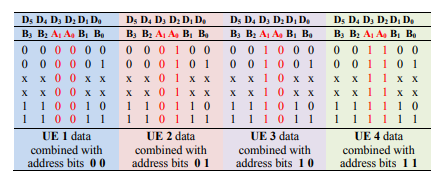
Constellation Shared Multiple Access - A Noma Scheme for Increased User Capacity in 5G MMTC
Authors
Kiran V. Shanbhag1 and Savitha H. M.2, 1Anjuman Institute of Technology and Management, India, 2St Joseph Engineering College, India
Abstract
While the legacy cyclic prefix orthogonal frequency division multiple access is retained as the preferred multiple access scheme for 5G enhanced mobile broadband the research is now focussed on the multiple access schemes for massive machine type communication (mMTC) and ultra-reliable low latency communication .Though orthogonal multiple access schemes provide simple reception, they limit number of simultaneous user equipment as against the primary requirement of mMTC. On the other hand, the various non-orthogonal multiple access schemes which have been proposed so far as the likely solution, need complex successive interference cancellation receivers. So a simplified scheme named constellation shared multiple access is proposed here which substantially increases the number of simultaneous users to be served within a single resource block (RB) in LTE or 5G New Radio, thus aiding the massive connectivity requirement of mMTC. This is achieved by differentiating among the users in constellation domain. Moreover, the simple architecture compatible with 5G eMBB makes it a strong contender multiple access contender for 5G mMTC.
Keywords
Non orthogonal multiple access, Quality of service, Massive connectivity, 5G, Successive interference cancellation receiver, mMTC.
https://aircconline.com/ijcnc/V14N3/14322cnc05.pdf
Wednesday, May 25, 2022
Wednesday, July 29, 2020
LOCALIZATION SCHEMES FOR UNDERWATER WIRELESS SENSOR NETWORKS: SURVEY
Faiza Al-Salti1 , N. Alzeidi2 and
Khaled Day2
1Department of Computing, Muscat College, Oman
2Department of Computer Science, Sultan Qaboos
University, Oman
Abstract
Underwater Wireless Sensor Networks (UWSNs) enable a variety of applications such as fish farming and
water quality monitoring. One of the critical tasks in such networks is localization. Location information
can be used in sensor networks for several purposes such as (i) data tagging in which sensed information
is not useful for the application unless the location of the sensed information is known, (ii) tracking objects
or (iii) multi-hop data transmission in geographic routing protocols. Since GPS does not work well
underwater, several localization schemes have been developed for UWSNs. This paper surveys the state-ofthe-art of localization schemes for UWSNs. It describes the existing schemes and classifies them into
different categories. Furthermore, the paper discusses some open research issues that need further
investigation in this area.
Keywords
Full Text
Tuesday, July 21, 2020
SIGNALING PROTOCOLS FOR LOCAL AREA NETWORKS OF DRONES
Prabhu Jyot Singh and Rohan de Silva
School of Engineering and Technology CQ University Sydney, Australia
Abstract
Unmanned Aerial Vehicles (UAVs) or drones have become extremely popular and are used in various
commercial applications. When multiple UAVs communicate and work together, they form a UAV network.
A private UAV network or Local Area Network of Drones (LoDs) is a special type of UAV network which
has the minimum number of UAVs to carry out a certain task. All UAVs in a LoD use the wireless medium
to send and receive the data as well as the control signals. An organization or a single owner will be more
interested in this type of network, where they want multiple UAVs to scan an area, communicate with each
other, and send all the images and live video streams to a single ground station. The currently available
commercial UAVs Can send the video signals to and receive control signals only from their own ground
station controllers. However, in an LoD network where UAVs are connected in tandem, the UAVs that are
in the middle of the network have to carry the control and video signals of other UAVs. Given the limited
processing power and dynamic memory capacity of UAVs, this would increase the queuing delays and
performance.
In this paper, we study the frame formats of existing control, feedback, and data messages of commercial
AR UAVs and propose a new approach to construct the payloads of control and feedback frames that are
suitable for an LoDs. We compare the performance of our approach of single control and feedback frame
for all UAVs in a LoD branch with that of separate control and feedback frames for each UAV. We
calculate and compare the UAV node processing delay in both types of signaling mechanisms and show
that the single control and feedback frame signaling has less delay on the average.
Keywords
Full Text
Wednesday, July 8, 2020
ENERGY-EFFICIENT MULTI-HOP ROUTING WITH UNEQUAL CLUSTERING APPROACH FOR WIRELESS SENSOR NETWORKS
Younes El Assari , Samia Al Fallah, Jihane El Aasri, Mounir Arioua and
Ahmed El Oualkadi
Laboratory of Information and Communication Technologies, National School of
Applied Sciences, Abdelmalek Essaadi University, Tangier, Morocco
Laboratory of Information and Communication Technologies, National School of Applied Sciences, Abdelmalek Essaadi University, Tangier, Morocco
Abstract
The development of an energy-efficient routing protocol, capable of extending the life of the network, is
one of the main constraints of wireless sensor networks (WSN). Research studies on WSN routing prove
that clustering offers an effective approach to prolong the lifetime of a WSN, particularly when it is
combined with multi-hop communication that can reduces energy costs by minimizing the distance between
transmitter and receiver. Most clustering algorithms using multi-hop in data transmission encounter the
hotspot problem. In this work, an Energy-efficient Multi-hop routing with Unequal Clustering approach
(EMUC) is proposed, to create clusters of different sizes, which depend on the distance between the sensor
node and the base station. Equilibrate the energy dissipation between the cluster heads is the purpose of
this approach by adopting multi-hop communication to relay data to the base station. The implementation
of multi-hop mode to transmit data to the base station reduces the energy cost of transmission over long
distances. The effectiveness of this approach is validated through performed simulations, which prove that
EMUC balances energy consumption between sensor nodes, mitigates the hotspots problem, saves more
energy and significantly extends the network lifetime.
Keywords
Full Text
Monday, June 29, 2020
SWARM OPTIMIZATION BASED GRAVITATIONAL SEARCH APPROACH FOR CHANNEL ASSIGNMENT IN MCMR WIRELESS MESH NETWORK
Nandini Balusu1 ,
Suresh Pabboju2 and Narsimha G 3
1Assistant
Professor, Department of Computer Science, Telangana University, Nizamabad,
Telangana, India.
2Professor,
Chaitanya Bharathi Institute of Technology, Hyderabad, Telangana State, India.
3Professor,
Department of Computer Science, JNTUH College of Engineering, Hyderabad,
Telangana, India.
Abstract
Wireless Mesh Networks offers cost-efficient and higher network efficiency by utilizing multiple channels
multiple radio(MCMR) nodes. Also addition, the amalgamation of multiple radio nodes and multiple hops
mesh framework tends to overcome the limitation of single radio networks like the ability to achieve the rising
accessible system bandwidth. In spite of these benefits, certain MCMR wireless mesh networks still suffer from
performance issues like network connectivity, network throughput degradation whenever network size
increases. Thus, an effective channel assignment (CA) approach could minimize the number of interference cochannels and enhance the throughput of the network. Thus, a hybridized form of gravitational search approach
and particle swarm optimization is presented in this paper to resolve the issue of CA. The velocity and position
updates of PSO are merged with the GSA operations to obtain the best channel with good connectivity. This
approach maximizes the capability of exploration and exploitation for global and local searches using PSO
and GSA operations. The goal of this methodology is the minimization of a number of interfering links and the
maximization of network connectivity and throughput. The experimental results for this approach are carried
out using NS2 and compared with previously suggested heuristic optimization algorithms such as Learning
Automated and Genetic Algorithm Approach, Improved Gravitational Search Approach and Dynamic particle
swarm optimization Approach. The simulation outcome showed a better performance of the suggested
methodology compared to existing methodologies.
Keywords
Full Text
Tuesday, June 16, 2020
6RLR-ABC: 6LOWPAN ROUTING PROTOCOL WITH LOCAL REPAIR USING BIO INSPIRED ARTIFICIAL BEE COLONY
Nurul Halimatul Asmak Ismail1 , Samer A. B. Awwad2
and Rosilah Hassan3
1Department of Computer Science and Information
Technology, College of Community, Princess Nourah Bint Abdulrahman University
Kingdom of Saudi Arabia
2 Independent Researcher, Kingdom of Saudi Arabia
3Center for Cyber Security,Faculty of Information
Science and Technology, UniversitiKebangsaan Malaysia, 43600, UKM Bangi,
Selangor Darul Ehsan, Malaysia
Abstract
In recent years, Micro-Electro-Mechanical System (MEMS) has successfully enabled the development of
IPv6 over Low power Wireless Personal Area Network (6LoWPAN). This network is equipped with lowcost, low-power, lightweight and varied functions devices. These devices are capable of amassing, storing,
processing environmental information and conversing with neighbouring sensors. These requisites pose a
new and interesting challenge for the development of IEEE 802.15.4 together with routing protocol. In this
work, 6LoWPAN Routing Protocol with Local Repair Using Bio Inspired Artificial Bee Colony (6RLRABC) has been introduced. This protocol supports connection establishment between nodes in an energyefficient manner while maintaining high packet delivery ratio and throughput and minimizing average endto-end delay. This protocol has been evaluated based on increasing generated traffic. The performance of
the designed 6RLR-ABC routing protocol has been evaluated compared to 6LoWPAN Ad-hoc On-Demand
Distance Vector (LOAD) routing protocol. LOAD protocol has been chosen since it is the most relevant
existed 6LoWPANrouting protocol. The simulation results show that the introduced 6RLR-ABC protocol
achieves lower packet average end-to-end delay and lower energy consumption compared to LOAD
protocol.Additionally,the packet delivery ratio of the designed protocol is much higher than LOAD
protocol. The proposed 6RLR-ABC achieved about 39% higher packet delivery ratio and about 54.8%
higher throughput while simultaneously offering lower average end-to-end delay and lower average
energy consumption than LOAD protocol.
Keywords
Full Text
Thursday, June 11, 2020
Consensus Routing And Environmental Discrete Trust Based Secure AODV in MANETs
Radha Raman Chandan and P.K.Mishra
Department of Computer Science & DST-CIMS,
Institute of Science, Banaras Hindu University, Varanasi
Department of Computer Science & DST-CIMS, Institute of Science, Banaras Hindu University, Varanasi
Abstract
The Mobile Adhoc Network (MANET) is a wireless network model for infrastructure-less
communication, and it provides numerous applications in different areas. The MANET is vulnerable to a
Black-hole attack, and it affects routing functionality by dropping all the incoming packets purposefully.
The Black-hole attackers pretend that it always has the best path to the destination node to mislead the
source nodes. Trust is the critical factor for detecting and isolating the Black-hole attackers from the
network. However, the harsh channel conditions make it difficult to differentiate the Black-hole routing
activities and accurate trust measurement. Hence, incorporating the consensus-based trust evidence
collection from the neighbouring nodes improves the accuracy of trust. For improving the accuracy of
trust, this work suggests Consensus Routing and Environmental DIscrete Trust (CREDIT) Based Secure
AODV. The CREDIT incorporates Discrete and Consensus trust information. The Discrete parameters
represent the specific characteristics of the Black-hole attacks, such as routing behaviour, hop count
deviation, and sequence number deviation. The direct trust accurately differentiates the Black-hole
attackers using Discrete parameters, only when the nodes perform sufficient communication between
the nodes. To solve such issues, the CREDIT includes the Consensus-based trust information. However,
secure routing against the Black-hole attack is challenging due to incomplete preferences. The in-degree
centrality and Importance degree measurement on the collected consensus-based trust from decisionmakers solve the incomplete preference issue as well as improves the accuracy of trust. The performance
of the proposed scheme is evaluated using Network Simulator-2 (NS2). From the simulation results, it
is proved that the detection accuracy and throughput of the proposed CREDIT are substantially high
and the proposed CREDIT scheme outperforms the existing work
Keywords
Full Text
Thursday, May 28, 2020
ENERGY PERFORMANCE OF A COMBINED HORIZONTAL AND VERTICAL COMPRESSION APPROACH IN CLUSTER-BASED WSNS
JIHANE EL AASRI, SAMIA AL FALLAH, MOUNIR ARIOUA and
AHMED EL OUALKADI
Laboratory of Information and Communication Technologies, National School of
Applied Science, Tangier
Abdelmalek Essaadi University, Morocco
AHMED EL OUALKADI
Laboratory of Information and Communication Technologies, National School of Applied Science, Tangier Abdelmalek Essaadi University, Morocco
Abstract
Energy efficiency is an essential issue to be reckoned in wireless sensor networks development.
Since the low-powered sensor nodes deplete their energy in transmitting the collected information,
several strategies have been proposed to investigate the communication power consumption, in
order to reduce the amount of transmitted data without affecting the information reliability. Lossy
compression is a promising solution recently adapted to overcome the challenging energy
consumption, by exploiting the data correlation and discarding the redundant information. In this
paper, we propose a hybrid compression approach based on two dimensions specified as horizontal
(HC) and vertical compression (VC), typically implemented in cluster-based routing architecture.
The proposed scheme considers two key performance metrics, energy expenditure, and data
accuracy to decide the adequate compression approach based on HC-VC or VC-HC configuration
according to each WSN application requirement. Simulation results exhibit the performance of both
proposed approaches in terms of extending the clustering network lifetime.
Keywords
Full Text
Thursday, May 21, 2020
CLBNSRM - CONFIDENCE LEVEL BASED UNBLEND NEIGHBOR SELECTION &BLEND NODE REPORT BASED OPTIMIZED ROUTE FORMATION IN MANET
S. J. Patil1 , L.S. Admuthe2 and M. R.
Patil3
1Research Scholer,Department of Electronics and
Communication, VTU, RRC, Belgavi, Karnataka, India.
2 Department of Electronics Engineering, DKTE’S
Textile & Engineering Institute, Ichalkaranji. Maharashtra, India.
3 J.A.G.M. Institute of Technology, Jamkhandhi,
Karnataka, India.
Abstract
A mobile Ad-hoc network (MANET) is an impulsive network that can be recognized with no predetermined
infrastructure. To achieve safe path selection cryptographic key exchange was implemented mostly in turn
of huge computational cost. Confidence based coordination in MANET focuses on routing challenges
created by selfish nodes, as energy utilization & time factor are key issues in this aspect. The present
protocol is focused on fuzzy optimization-based node confidence estimation and path selection with
minimum energy utilization. The node with maximum confidence value will give high priority to include in
the path for transmission. In the implemented protocol to build a novel confidence-based model
multidimensional factors like confidence value, link cost, degree of node and node energy are included as
decision-making factors. The proposed protocol CLBNSRM estimates confidence level in four steps to
decide a trustworthiness of neighboring node. To estimate the efficiency of the present confidence model
various protocols are compared by using attributes like the number of nodes, node speed, malicious node
variation, etc. Moreover, different parameters like Packet delivery ratio, Throughput, Residual energy, and
Packet dropped are considered with these attribute variations. Experimental results indicate that PDR and
Throughput increase although in presence of malicious nodes, along with the utilization of minimal energy.
Statistical analysis is carried out for mathematical modeling. This analysis shows that a linear model of an
implemented protocol is better than compared protocol with all the aspects.
Keywords
Full Text
Thursday, May 14, 2020
AUTO RESOURCE MANAGEMENT TO ENHANCE RELIABILITY AND ENERGY CONSUMPTION IN HETEROGENEOUS CLOUD COMPUTING
Moataz H. Khalil1, 2, Mohamed Azab2 , Ashraf
Elsayed3, Walaa Sheta1, 2 Mahmoud Gabr3 and
Adel S. Elmaghraby1,2
1CECS Department, University of Louisville, Kentucky, USA.
2The City of Scientific Research and Technology
Applications, Egypt.
3Department of Mathematics & Computer Science, Faculty
of Science,
Alexandria University, Alexandria, Egypt.
Abstract
A classic information processing has been replaced by cloud computing in more studies where cloud
computing becomes more popular and growing than other computing models. Cloud computing works for
providing on-demand services for users. Reliability and energy consumption are two hot challenges and
tradeoffs problem in the cloud computing environment that requires accurate attention and research. This
paper proposes an Auto Resource Management (ARM) scheme to enhance reliability by reducing the
Service Level Agreement (SLA) violation and reduce energy consumed by cloud computing servers. In this
context, the ARM consists of three compounds, they are static/dynamic threshold, virtual machine selection
policy, and short prediction resource utilization method. The Minimum Utilization Non-Negative (MUN)
virtual machine selection policy and Rate of Change (RoC) dynamic threshold present in this paper. Also, a
method of choosing a value as the static threshold is proposed. To improve ARM performance, the paper
proposes a Short Prediction Resource Utilization (SPRU) that aims to improve the process of decision
making by including the resources utilization of future time and the current time. The output results show
that SPRU enhanced the decision-making process for managing cloud computing resources and reduced
energy consumption and the SLA violation. The proposed scheme tested under real workload data over the
CloudSim simulator
Keywords
Full Text
Friday, May 8, 2020
VIRTUAL CACHE & VIRTUAL WAN ACCELERATOR FUNCTION PLACEMENT FOR COST-EFFECTIVE CONTENT DELIVERY SERVICES
Shin-ichi Kuribayashi
Department of Computer and Information Science, Seikei University, Japan
Abstract
The algorithm to determine the place where network functions are located and how much capacities of
network function flexibly are required is essential for economical NFV (Network Functions Virtualization)-
based network design. The authors proposed a placement algorithm of virtual routing function and virtual
firewall function in the NFV-based network for minimizing the total network cost and developed the
effective allocation guidelines for these virtual functions.
This paper proposes an NFV-based virtual cache placement algorithm for cost-effective content delivery
service such as video streaming, which judges the optimal placement of the cache per content, not on a
virtual machine (VM) like the conventional CDN (virtual CDN). Moreover, the content is dynamically
cached at the time of first content delivery like ICN (Information-Centric Networking) without placing the
cache in advance like CDN .Our evaluation results revealed that the proposed algorithm could reduce total
network costs by about 15% compared with CDN .Even if the content cache is deployed economically,
performance will degrade if the latency between the content cache and user terminals is long. In order to
prevent such a case, this paper also propose a cost-effective placement method of NFV-based WAN
accelerator function.
Keywords
Full Text
Friday, May 1, 2020
MOBILE CROWD SENSING RPL-BASED ROUTING PROTOCOL FOR SMART CITY
Yahya Al Sawafi, Abderezak Touzene, Khaled Day and Nasser Alzeidi
Department of Computer Science, Sultan Qaboos University, Muscat, Oman
Abstract
Recently, Mobile Crowd Sensing (MCS) has been used in many smart city monitoring applications,
leveraging the latest smartphone features of sensing and networking. However, most of these applications
use a direct internet connection for sending the collected data to the server through a 3G or 4G (LTE)
network.This type of communication leads to higher bandwidth, battery consumption, and higher data plan
cost. In this paper, we presenta new ad-hoc tree-based routing protocol named MCS-RPL based on theIoT
RPL protocol for the smart city context. The proposed protocol aims to utilize smartphone and Mobile
CrowdSensing (MCS) opportunistically to support static Wireless Sensor Network (WSN) and to cover
more sensing areas with less routing overhead and power consumption. MCS-RPL usesa grid-based cluster
head to address mobility issues and reduce control packets. The conducted performance evaluation reveals
that the proposed protocol outperforms RPL in terms of packet delivery ratio and power consumption due
to control packet overhead reduction, which reached more than 75% in the tested scenarios
Keywords
Full Text
Thursday, April 16, 2020
Performance Evaluation of Modbus TCP in Normal Operation and Under A Distributed Denial of Service Attack
Eric Gamess1 , Brody Smith1 , and Guillermo Francia III2
1MCIS Department, Jacksonville State University, Jacksonville, AL, USA
2Center for Cybersecurity, University of West Florida, Pensacola, FL, USA
Abstract
Modbus is the de facto standard communication protocol for the industrial world. It was initially designed to be used in serial communications (Modbus RTU/ASCII). However, not long ago, it was adapted to TCP due to the increasing popularity of the TCP/IP stack. Since it was originally designed for controlled serial lines, Modbus does not have any security features. In this paper, we wrote several benchmarks to evaluate the performance of networking devices that run Modbus TCP. Parameters reported by our benchmarks include: (1) response time for Modbus requests, (2) maximum number of requests successfully handled by Modbus devices in a specific amount of time, and (3) monitoring of Modbus devices when suffering a Distributed Denial of Service attack. Due to the growing adoption of IoT technologies, we also selected two widely known and inexpensive development boards (ESP8266 and Raspberry Pi 3 B+/OpenPLC) to realize a performance evaluation of Modbus TCP.
Keywords
Full Text
Tuesday, April 7, 2020
AN ADAPTIVE DIFFSERV APPROACH TO SUPPORT QOS IN NETWORK MOBILITY NEMO ENVIRONMENTEVALUATION OF MODBUS TCP IN NORMAL OPERATION AND UNDER A DISTRIBUTED DENIAL OF SERVICE ATTACK
Loay F. Hussein 1,2 ,
Aisha-Hassan AbdallaHashim2 , Mohamed Hadi Habaebi2 , and
Wan Haslina Hassan3
1 Department of Computer and
Information Sciences, Jouf University, Saudi Arabia
2Department of Electrical and
Computer Engineering, Kulliyyah of Engineering, International Islamic
University Malaysia, Kuala Lumpur, Malaysia
3Department of Electronic
Systems Engineering, Universiti Teknologi Malaysia, Kuala Lumpur, Malaysia
Abstract
Network Mobility Basic Support (NEMO BS) protocol (RFC 3963) is an extension of Mobile IPv6. The
NEMO BS embraced by IETF working group to permit any node in the portable network to be accessible to
the Internet despite the fact the network itself is roaming. This protocol likewise Mobile IPv6 doesn’t
deliver any kind of Quality of Service (QoS) guarantees to its clients. It can barely offer the same level of
services (i.e. Best-Effort) to all the users without obligation to the application’s needs. This propositions a
challenge to real-time applications that demand a precise level of QoS pledge. The Differentiated Services
has recently come to be the most widely used QoS support technology in IP networks due to its relative
simplicity and scalability benefits. This paper proposes a new scheme to provide QoS to mobile network
nodes within NEMO context. The proposed scheme intends to reduce handover latency for the users of
MNN as well as alleviates packet losses. The feasibility of the proposed enhancement is assessed by
measuring its performance against the native NEMO BS standard protocol using NS-2 simulator. The
obtained results in the simulation study have demonstrated that the proposed scheme outperforms the
standard NEMO BS protocol.
Keywords
Keywords
Full Text
Friday, January 31, 2020
COMPARATIVE AND QOS PERFORMANCE ANALYSIS OF TERRESTRIAL-AERIAL PLATFORMS-SATELLITES SYSTEMS FOR TEMPORARY EVENTS
Faris. A. Almalki
Department of Computer Engineering, College of Computers and Information Technology
Taif University, Kingdom of Saudi Arabia
Department of Computer Engineering, College of Computers and Information Technology
Taif University, Kingdom of Saudi Arabia
Abstract
Wireless communications, nowadays, becomes a vital element of people’s daily life. Providing global connectivity in future communication systems via the heterogeneous network opens up many research topics to investigate potentialities, enabling technologies, and challenges from the perspective of the integrated wireless systems. This paper aims to drive a comprehensive and comparative study on terrestrial-aerial platforms- satellite wireless communications systems, includes their characteristics and unravelling challenges. The comparison focuses on issues that reportedly can evaluate any wireless systems for temporary events. These issues are altitude and coverage, Radio Frequency (RF) propagation, interference, handover, power supply constraints, deployment and maintenance challenges, reliability on special events or disaster relief, cost-effectiveness and environmental impact. Last, Quality of service (QoS) performance is analysed for the four wireless communication systems from the temporary events perspective using the OPNET Modeller simulation tool. Results infer that space-based wireless systems outperform terrestrial ones.
Keywords
Full Text
-
VijayaLakshmi M1 and K Rama Linga Reddy2 1ETM Dept, GNITS, Hyderabad, India 2 HOD, ETM Dept, GNITS, Hyderabad, India ABSTRACT...
-
Swetha K V1 and Ravi Dara2 1Department of Computer Science & Engineering, CMR Institute of Technology, Bangalore, India 2Nevis N...
-
Shin-ichiKuribayashi Department of Computer and Information Science, Seikei University, Japan ABSTRACT As cloud computing provide...